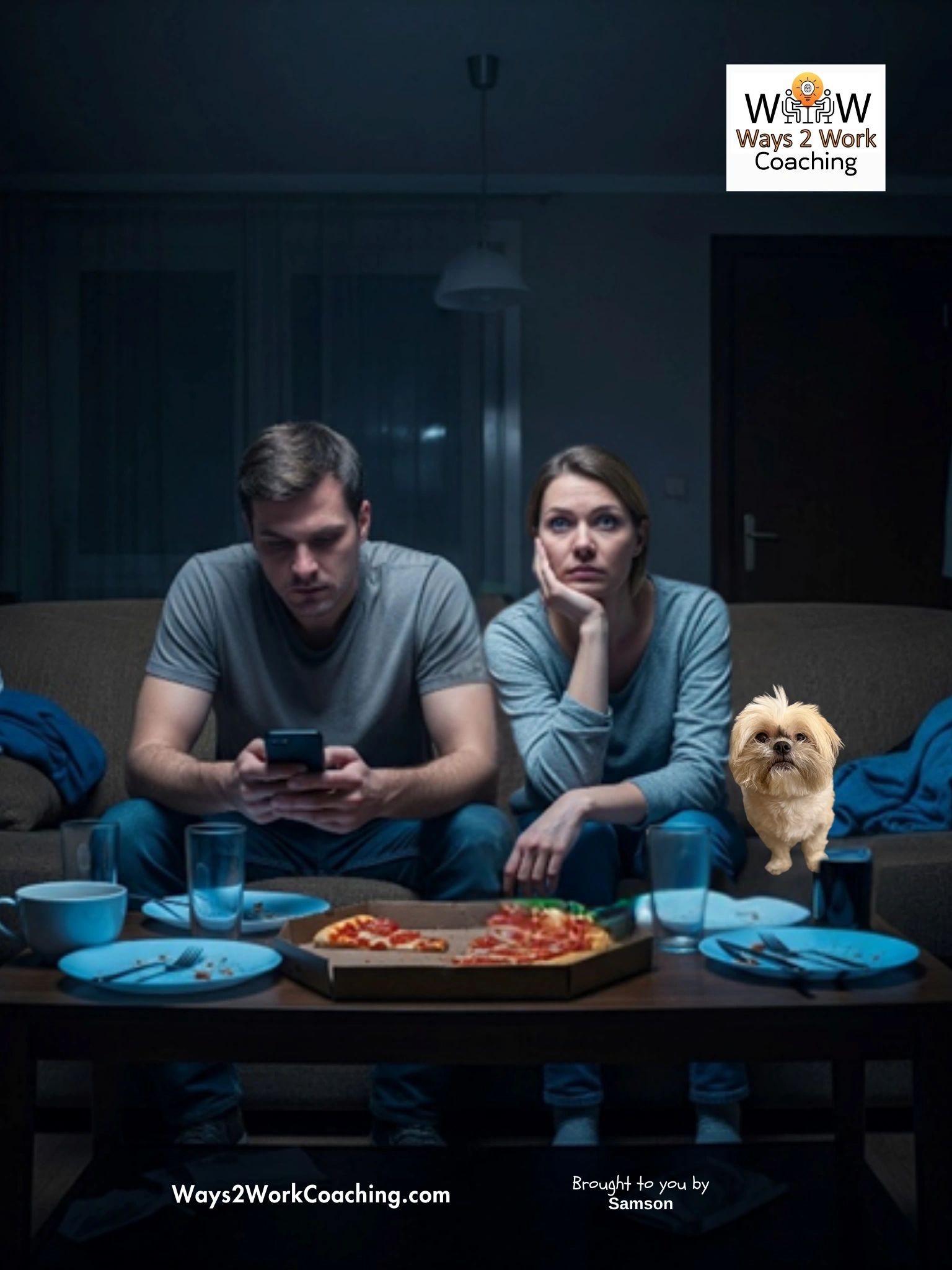
Boredom is a hard word to say out loud in a long-term relationship.
For me, when boredom shows up, it doesn’t come with indifference or a lack of love. It comes with guilt. Heavy, uncomfortable guilt.
I love my husband. He is steady, kind, and deeply committed. By most measures, I have a really good marriage. So, when I notice myself feeling bored, disconnected, or emotionally flat, my brain doesn’t get curious. It gets cruel.
Why can’t I just be content? What is wrong with me? Why do I always seem to want more?
And the conclusion my ADHD brain jumps to far too quickly is I must be a bad person.
Why ADHD boredom hits differently
This is where understanding the ADHD brain matters.
ADHD isn’t about not caring. It’s about how the brain regulates stimulation, interest, and emotional engagement. ADHD brains tend to run on curiosity, novelty, and meaning. When stimulation drops, the brain doesn’t quietly settle. It drifts. It disconnects. Sometimes it goes looking for something to wake it back up.
In relationships, especially long-term ones, routine and predictability are normal. Healthy, even. But for an ADHD brain, sameness can quietly reduce dopamine, which may show up as boredom, restlessness, or a vague sense of emotional distance, even when nothing is “wrong.”
That boredom isn’t a relationship verdict. It’s a neurological signal.
When boredom turns into shame
What makes this especially painful is the meaning we attach to it.
When boredom shows up for me, it’s rarely just boredom. It’s sadness layered with self-judgment. You should feel grateful. Your partner deserves better. Why are you so selfish and unappreciative? Cue the shame spiral.
Instead of saying anything, I often turn inward. I question myself rather than the situation. And that negative self-talk can create more distance than the boredom ever did.
A note about “the ick”
Many ADHDers experience something commonly called “the ick.” It’s that sudden, disproportionate irritation or aversion toward a partner (like hearing the chew…or breathe) that seems to come out of nowhere.
The ick is not unique to ADHD, but ADHD brains can be especially sensitive to small shifts in stimulation, predictability, or sensory input. When engagement is low, the brain sometimes latches onto tiny things and magnifies them.
The important thing to know is this: The ick is usually about under-stimulation, not a loss of love.
It often fades when curiosity, connection, or novelty are gently reintroduced.
What boredom does and does not mean
Boredom does not mean:
- you don’t love your partner
- your relationship is failing
- you chose the wrong person
Boredom often does mean:
- your brain may need more engagement
- connection may have become mostly logistical
- curiosity has quietly slipped into assumption
Seen this way, boredom becomes information, not an accusation.
See “Greg’s Corner” for a non-ADHDers partner perspective. Why, you ask? Because ADHD relationships conversations often center on the ADHD brain (understandably), but long-term connection works best when both partners’ needs are visible. This perspective helps ground boredom in reality, vs. self-blame.
Ways couples can work through ADHD-related boredom
Rather than reacting to boredom or trying to suppress it, it can help to approach it with curiosity and compassion.
Some ideas couples explore include:
- Talking about boredom without blame. Framing it as “how my brain works” instead of “what you’re not doing” can lower defensiveness.
- Adding small doses of novelty. Not big changes. Small shifts. A new question. A different routine. A slight change in environment.
- Prioritizing curiosity-based connection. Many ADHDers feel most connected when they feel genuinely known, not just supported. Simple prompts like “Tell me something new you learned today!” or “What cool (or not so cool) experience did you have this week?” can go a long way.
- Using structure that supports connection, not obligation. Predictable check-ins or shared rituals work best when they feel flexible and human, not like another task.
The bottom line
Boredom in ADHD relationships isn’t a red flag. It’s a signal.
A signal that the brain may be under-stimulated.
A signal that connection may need refreshing.
A signal that love is still there, even if engagement has dipped.
Understanding this has helped me move away from self-blame and toward curiosity, both about my own brain and about what connection can look like over time.
ADHD doesn’t make love weaker.
It just asks that we tend to it a little differently.