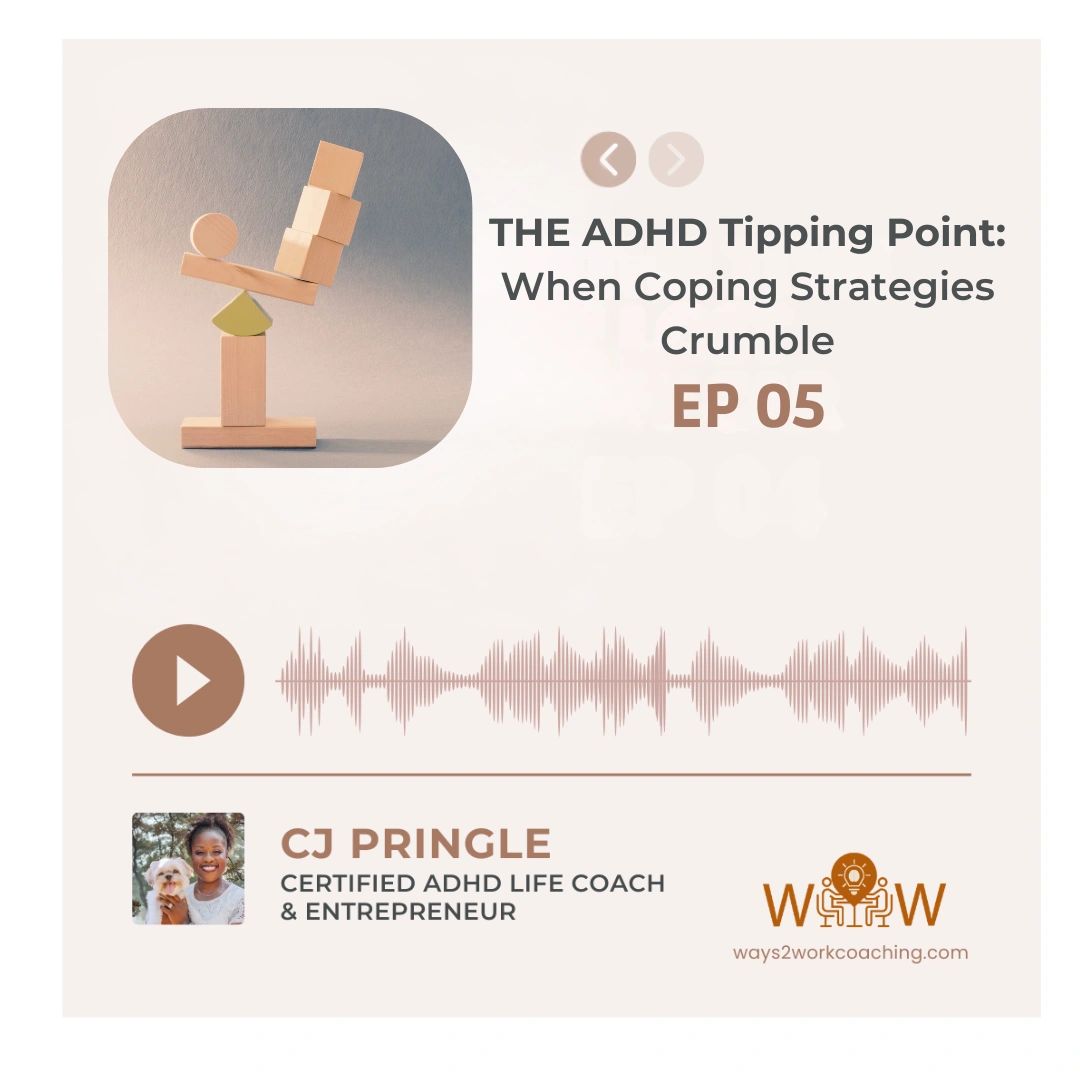
Ever had that moment when you realize your trusty Swiss Army knife of ADHD coping strategies suddenly feels more like a rusty butter knife? Welcome to what I call the "ADHD Tipping Point" – that pivotal moment when the strategies you've relied on for years start to falter, leaving you feeling like you're trying to bail out of a leaking boat with a red Solo cup...that is also leaking.
As someone who lived with undiagnosed ADHD for decades, I'm intimately familiar with this tipping point. It's like walking a tightrope while juggling flaming torches – you might be managing for a while, but eventually, something's got to give.
What Exactly is the ADHD Tipping Point?
The ADHD tipping point is that period in life where the strategies and workarounds you've used to compensate for your ADHD symptoms suddenly become ineffective. It's like your brain decided to rewrite the rulebook without giving you the updated copy.
For many of us with ADHD, especially those diagnosed as adults, we've spent years developing intricate systems to keep our lives on track. We're the MacGyvers of mental workarounds, creating complex solutions out of paperclips, bubble gum, and sheer willpower. But then life throws us a curveball, and suddenly our carefully constructed house of cards comes tumbling down.
What Causes the Tipping Point?
The tipping point often coincides with a significant life change. It could be:
- Graduating from high school and losing the structure it provided
- Starting college and facing a whole new level of independence
- Getting married and adjusting to your partner's way of doing things
- Having a child (or another child) and juggling new responsibilities
- Moving homes or cities
- Becoming an empty nester
- Retiring and losing the structure of work
- Taking on a new role at work with different demands
- Experiencing a change in family dynamics
- Dealing with changes in physical health or an injury
These life changes can expose the cracks in our coping strategies, leading to feelings of overwhelm and chaos.
My Personal Tipping Point
For me, the tipping point came after the pandemic. I had adapted to working from home, enjoying more family time, regular exercise, and better sleep. It was like I had stumbled into an alternate universe where life actually felt... manageable.
But when we were told to return to the office full-time, it felt like being asked to trade in my comfy sweatpants for a suit made of cacti. The strategies that had worked for me in the past suddenly felt inadequate in this new (old) environment.
The breaking point came during a business trip where I was sent alone to manage a major crisis. Despite straightforward instructions, I felt paralyzed by the multiple directions I was being pulled in. For the first time in my career, I was thoroughly chewed out by my boss. It was a humbling experience that left me shattered but determined to figure out what was wrong.
Recognizing Your Own Tipping Point
So, how do you know if you're approaching or have reached your ADHD tipping point? Here are some signs to watch out for:
- Increased feelings of overwhelm and chaos
- Your usual coping strategies no longer seem effective
- You're experiencing more frequent "ADHD moments" (i.e., losing things, forgetting appointments, etc.)
- Your work or personal life is starting to suffer noticeably
- You're feeling more emotionally volatile or experiencing more intense RSD (Rejection Sensitive Dysphoria)
- You're having trouble initiating tasks or completing projects
- Your sleep patterns or eating habits have become disrupted
Reaching your ADHD tipping point can feel scary, but it can also be an opportunity for growth and positive change. Here are some steps you can take:
- Acknowledge the struggle: Recognize that your current strategies aren't working as well as they used to. It's not a failure; it's a sign that you've outgrown your old tools.
- Seek professional help: Consider working with an ADHD coach or therapist who can help you develop new strategies tailored to your current life situation.
- Reassess your environment: Look for ways to modify your surroundings to better support your ADHD brain. This might mean creating a more structured workspace or using visual reminders.
- Be open with loved ones: Communicate with your family, friends, or colleagues about your struggles. They may be able to offer support or accommodations.
- Explore new coping strategies: What worked for you in the past might not work now. Be open to trying new techniques, whether it's using technology, mindfulness practices, or new organizational systems.
- Practice self-compassion: Remember, having ADHD means your brain works differently. It's not a character flaw or a lack of effort on your part.
The Silver Lining
While hitting your ADHD tipping point can be challenging, it can also be a catalyst for positive change. For me, it led to a complete career shift – from the corporate world to becoming an ADHD coach. Now, I get to help others navigate their own tipping points and discover strategies that work for their unique ADHD brains.
Remember, reaching your tipping point doesn't mean you've failed. It means you're ready for the next level of growth and self-discovery. And who knows? Your next great adventure might be waiting just on the other side of this challenge.
If you're feeling like you've hit your ADHD tipping point and need support, don't hesitate to reach out. Book a free consultation at ways2workcoaching.com, and let's explore how we can turn this challenging moment into an opportunity for growth and success.