📷
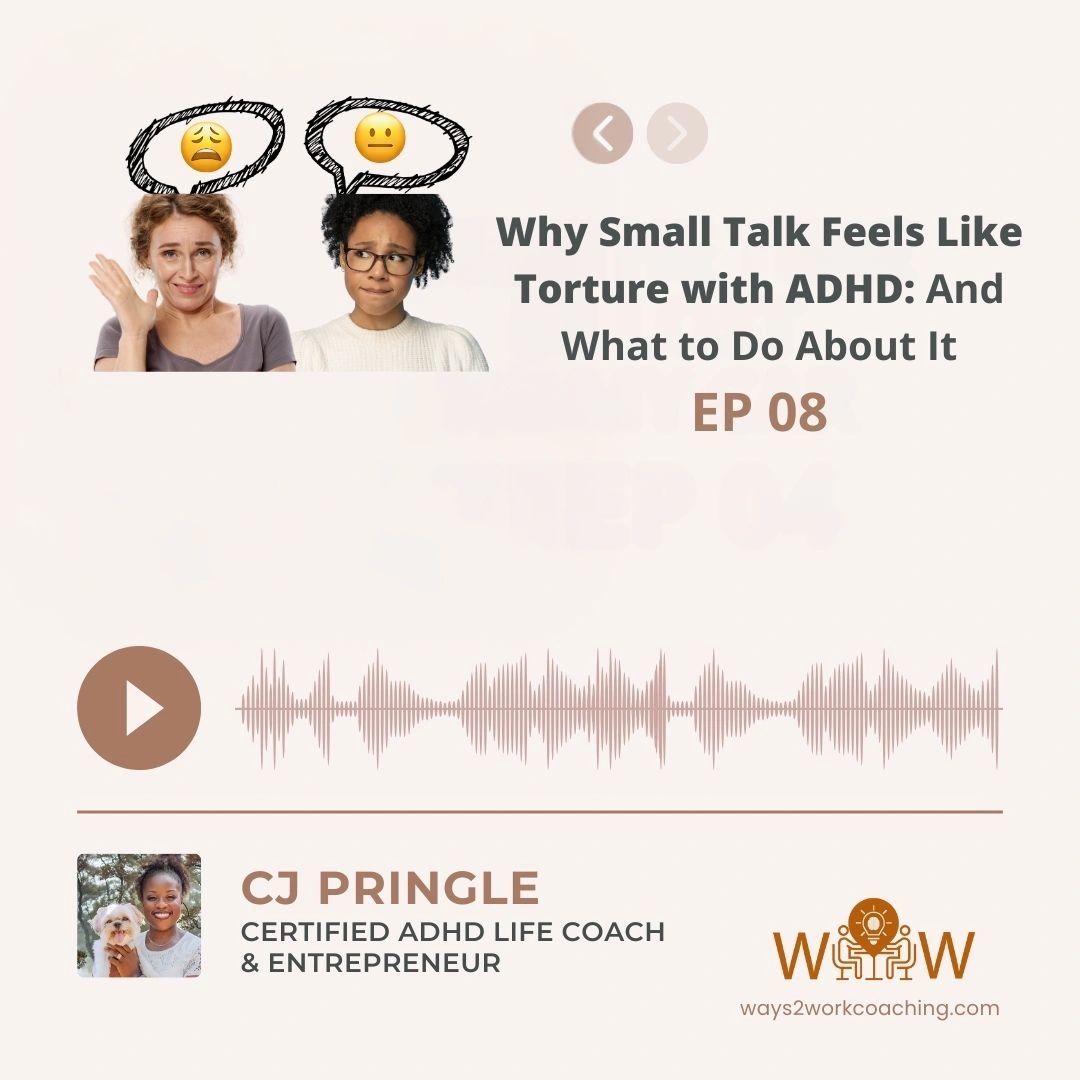
Why Small Talk Feels Like Torture with ADHD
Ever found yourself trapped in a conversation about the weather, desperately searching for an escape route? If you have ADHD, you're probably nodding vigorously right now. That painful, squirming feeling during small talk isn't just you being "antisocial" – it's actually a common ADHD experience, and there's a fascinating reason behind it.
The ADHD Brain: Wired for Deep Connections, Not Surface Chatter
Remember those dreaded phone calls where a well-meaning relative hands the phone to someone you barely remember, expecting an instant heart-to-heart? (Looking at you, Dad!) For those of us with ADHD, these moments aren't just awkward – they're excruciating. Our brains are literally screaming, "But why?!"
The truth is, the ADHD brain isn't wired for surface-level interactions. We're deep divers in a world of shallow swimmers. As one of my coaching colleagues brilliantly put it, "It's not so much that you hate small talk – you're just anxious to make a real connection." That insight hit home like a lightning bolt.
The Corporate Small Talk Struggle Is Real
Picture this: You're at a business dinner, surrounded by new vendors and colleagues. Everyone else seems to effortlessly float from one polite conversation to another, while you're internally comparing the experience to nails on a chalkboard. Sound familiar?
For years, I navigated corporate environments feeling like I was wearing an ill-fitting mask, performing the dance of casual conversation while my brain desperately sought deeper meaning. It wasn't until I understood my ADHD that these experiences finally made sense.
An Interesting Paradox
📷Here's where it gets interesting. Through my volunteer work, I've noticed something fascinating: While the prospect of meeting new people initially fills me with dread, once I make a genuine connection with someone, my enthusiasm skyrockets. Suddenly, I'm excited about my “new friend” and can't wait for our next interaction.
This isn't a contradiction – it's perfectly aligned with how the ADHD brain works. We thrive on authentic connections and meaningful exchanges. It's artificial, surface-level stuff that drains our energy.
Why Does This Happen?
Several ADHD characteristics contribute to our small talk struggles:
· Executive function challenges make it harder to filter and organize thoughts in real-time
· Our need for stimulation means surface-level conversations feel unbearably boring
· Time blindness can make brief exchanges feel endless
· Social anxiety often accompanies ADHD, adding another layer of complexity
Turning Small Talk into Real Talk: Practical Strategies
So, what can we do about it? Here are some approaches that have worked for me and my clients:
1. Use the "Deep Dive" technique: Turn standard small talk questions into opportunities for meaningful conversation. Instead of "How are you?" try "What's been exciting you lately?"
2. Practice the "Connection First" mindset: Remember that small talk can be a bridge to deeper connections – it doesn't have to be the destination.
3. Set realistic expectations: Not every interaction needs to become a profound exchange. Sometimes, weather chat is just weather chat.
4. Have some go-to topics ready: Keep a mental list of interesting conversation starters that genuinely interest you.
The Silver Lining
Understanding that this is an ADHD trait – not a personal failing – can be incredibly liberating. Your desire for meaningful connection isn't a weakness; it's a strength. It's what makes people with ADHD often excellent friends, passionate advocates, and empathetic listeners once we break through the small talk barrier.
Moving Forward
Next time you find yourself dreading a social situation filled with small talk, remember you're not broken, you're just wired differently. Your brain is seeking meaningful connections in a world that often settles for surface-level interactions. And that's not just okay – it's pretty amazing.
Would you like to share your own experiences with small talk and ADHD? Drop a comment below or reach out for a coaching session where we can explore strategies tailored to your unique situation.