I have a "love–hate" relationship with words.
They never seem to show up when I need them most. It is always during a critical conversation, an important presentation, or any moment that actually matters. My nervousness, excitement, or emotional investment in the topic seems to trigger a mass exodus of words from my brain. Gone. Vanished.
Then, later, when I am alone and replaying the conversation in my head, the words magically return. The perfect phrasing. The clear explanation. The response I wish I had given in the moment.
If this sounds familiar, you are not broken, careless, or bad at conversation. This is working memory, and for adults with ADHD, it is one of the most vulnerable executive functions, especially in social settings.
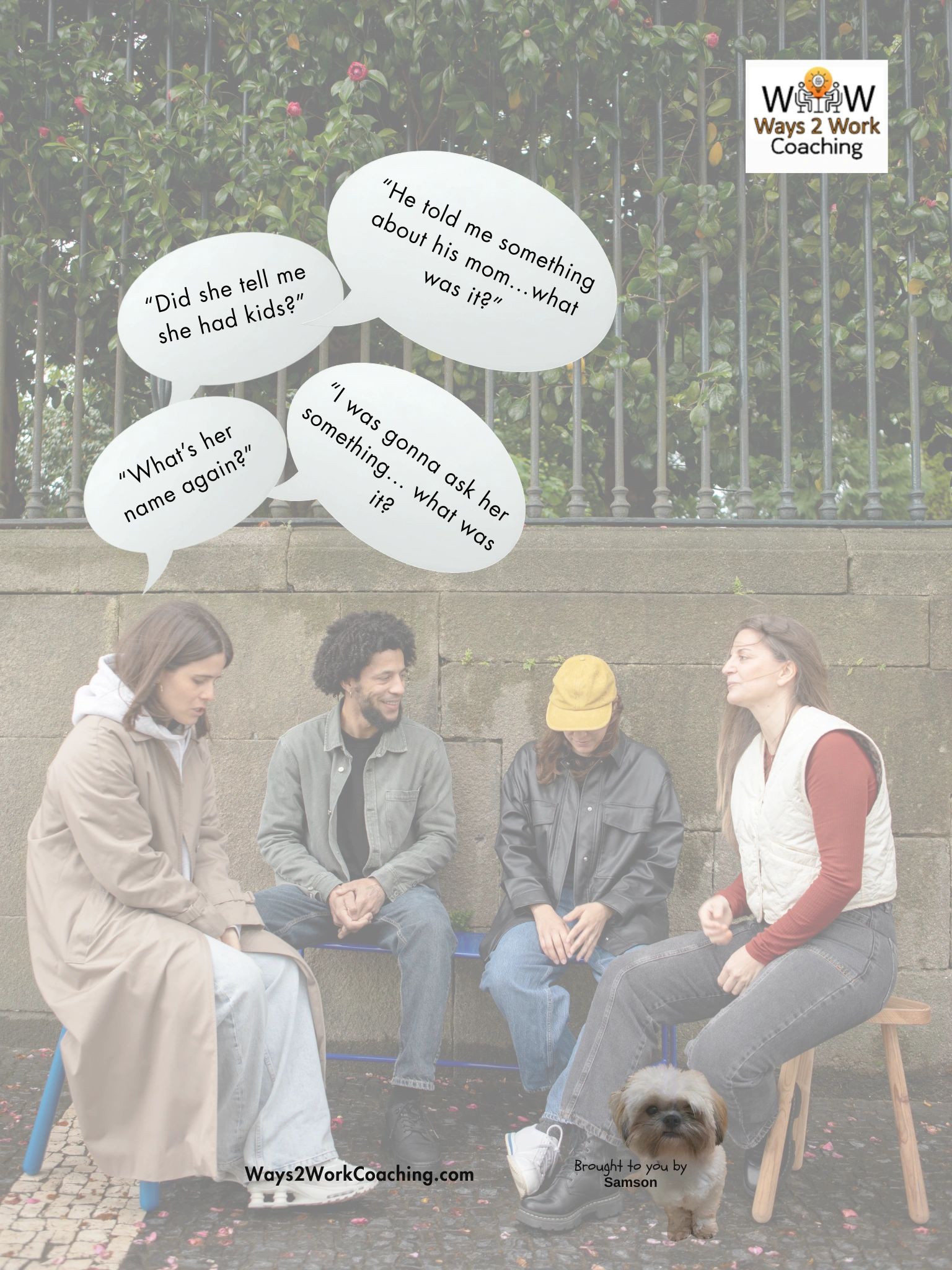
For many adults with ADHD, conversations can feel like a mental juggling act. You walk away forgetting names, missing key details, or feeling frustrated that you could not articulate what you wanted to say. This is not a character flaw. It is neurology.
In this article, we will explore why working memory breaks down so easily during casual conversations and what actually helps, because “try harder” is not the answer. You will also learn practical ways to become a more active listener, decide what is truly worth remembering, and create systems that support your brain instead of exhausting it.
Why Working Memory Breaks Down in Conversation
Working memory is the brain’s ability to hold information temporarily while actively using it. In casual conversations, ADHD brains are often juggling:
- Processing what is being said
- Regulating impulses not to interrupt
- Managing internal thoughts or emotional reactions
- Tracking social cues and body language
- Preparing what to say next
That is a lot of cognitive load. Working memory has limited capacity, and ADHD reduces how long information stays accessible. This is not a lack of caring or intelligence. It is a neurological constraint.
Why “Trying Harder” Does Not Work
Many people with ADHD respond by telling themselves to “focus more” or “pay better attention.” This often backfires. The harder you try to hold everything, the faster working memory overloads and drops information.
Improvement comes from reducing what you try to hold, not increasing effort.
My Piano Recital Story
There is another layer to working memory struggles that often goes unnamed, and for me it started early. As a child, I played piano and performed in recitals. During performances, my mind would sometimes wander. When I snapped back into the moment, I had no idea where I was in the piece. I would go completely blank, unable to continue, frozen in front of an audience.
At the time, I believed this meant I had not practiced enough or memorized well enough. I carried a lot of shame around those moments. Only much later did I realize this was not a failure of effort or discipline, but a working memory collapse under pressure, something that is very common in ADHD. That realization brings up a lot of emotion. Had I known then what I know now, I might have learned how to work with my brain instead of constantly blaming myself for letting it fail me.
Experiences like this are often why adults with ADHD spend years trying to remember more, instead of learning how to remember differently.
Shift From Remembering What Matters
One of the most helpful mindset shifts is moving from random recall to intentional recall.
Ask yourself:
- What types of information actually matter to me in conversations?
- What would help me feel more connected later?
Examples of intentional memory targets:
- Names and relationships
- Major life events or changes
- Emotional themes rather than exact details
- Follow-up items like plans, milestones, or stressors
You are not meant to remember every detail. You are choosing what deserves space in working memory.
Strategies To Be A More Active Listener
These strategies support working memory by anchoring attention externally.
1. Listen for themes, not transcripts
Instead of holding exact wording, listen for:
- The emotion behind the story
- The main point or concern
- The “why” behind what they are sharing
2. Use reflective responses
Brief reflections help both connection and memory:
- “That sounds really overwhelming.”
- “So this has been building for a while?”
This reinforces understanding and consolidates memory.
3. Give your hands something simple to do
Low-effort fidgeting can stabilize attention without pulling cognitive resources away.
4. Ask clarifying questions instead of rehearsing replies
Curiosity keeps you present. Mental rehearsal pulls attention inward and weakens recall.
Remembering Conversations After They End
Working memory fades quickly unless information is transferred elsewhere.
Helpful options:
- Jot a single keyword or name in your phone after meaningful conversations
- Send a brief follow-up text summarizing what mattered
- Create simple categories like “people,” “follow-ups,” or “important dates”
You are not outsourcing memory because you are failing. You are building an external working memory system that fits your brain.
How ADHD Coaching Helps
ADHD coaching helps you:
- Reduce cognitive overload instead of trying to “focus harder” or memorize more
- Identify what actually matters to remember and let go of unnecessary mental clutter
- Build simple, personalized systems to support memory outside your brain
- Practice strategies for staying present and recovering when your mind goes blank
- Untangle years of self-blame tied to working memory struggles and rebuild self-trust
The goal is not perfection. It is presence with intention.